
Views: 0 Author: Site Editor Publish Time: 2026-10-14 Origin: Site


Buying power tools at scale presents unique challenges for commercial procurement teams. You must move far beyond consumer-grade spec sheets to build a reliable fleet. Standalone metrics do not tell the entire story for professional crews. Transitioning to a new cordless platform requires careful planning. You need to balance immediate capital expenditure against long-term productivity gains and maintenance reductions. Modern fleets demand seamless compatibility, fast charging, and daily operational reliability to keep job sites running efficiently. Every lost hour impacts project margins.
This article provides a vendor-neutral, evidence-based framework for evaluating commercial-grade equipment. We will explore motor lifespans, battery ecosystems, and critical ergonomics. You will learn exactly how to analyze different models. We will help you shortlist the right tools for manufacturing floors, construction sites, and specialized maintenance teams.
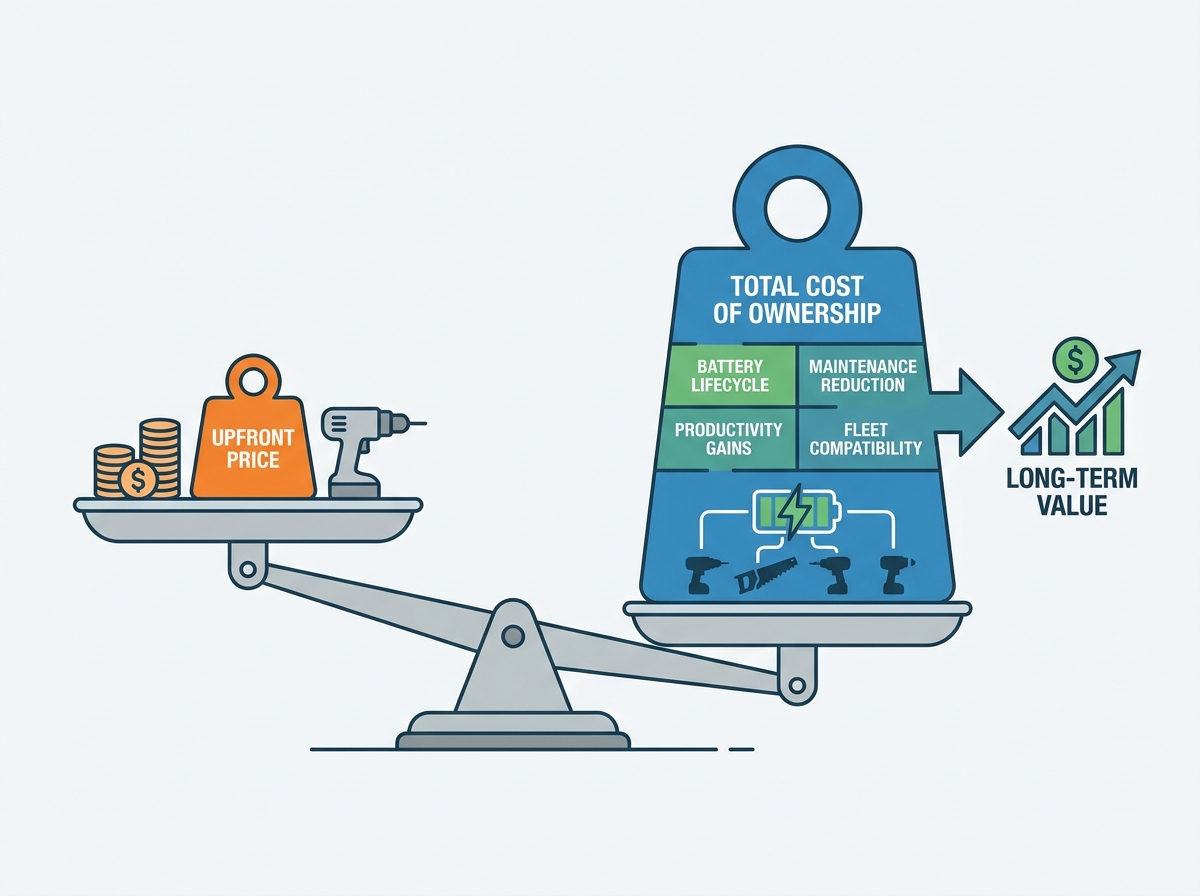
Evaluate Total Cost of Ownership (TCO): Upfront pricing matters less than battery degradation rates, motor lifespan, and warranty coverage when outfitting a business.
Standardize Your Battery Ecosystem: Selecting the best lithium ion drill is fundamentally about buying into a scalable, reliable battery platform that supports your entire tool fleet.
Prioritize Brushless Technology: For high-volume commercial use, brushless motors reduce thermal failure, extend battery runtimes, and lower maintenance costs.
Match Power to Application: Avoid over-speccing; balance Voltage (V) and Amp-hours (Ah) against tool weight to minimize worker fatigue without sacrificing necessary torque.
Commercial buyers must shift their evaluation from isolated product specifications to actual operational outcomes. Consumer marketing often highlights maximum speed or peak torque. These metrics rarely reflect real-world industrial demands. Professional crews need to measure success through sustained performance metrics. You should track the number of fastenings per charge. You must evaluate the mean time between failures (MTBF). These indicators reveal how a tool behaves under continuous, heavy-duty strain.
Success on a job site depends on consistency. A drill running at maximum speed but overheating after ten minutes fails the commercial test. You need tools built for prolonged cycles. Evaluate thermal cutoff points and electronic overload protections. Equipment must survive aggressive use day after day. Focus entirely on metrics reflecting endurance, reliability, and precision.
Mapping the hidden costs of commercial drills is essential. Upfront purchase prices represent only a fraction of your fleet expenses. Battery replacement cycles dictate your long-term budget. Lithium-ion cells degrade naturally over time. Job site temperature extremes accelerate this degradation. You must account for frequent replacement cycles when modeling future budgets.
Downtime from thermal overloads also drains profitability. Overworked drills shut down to protect internal components. Workers stand idle while waiting for tools to cool. Proprietary charger infrastructure adds another financial layer. Upgrading an entire charging station network requires significant capital. You should analyze these lifecycle expenses before signing a bulk purchase order.
Running mixed-brand tool fleets creates immense operational friction. Mechanics and carpenters waste time searching for specific batteries. Chargers clutter work stations and trip breakers. A unified ecosystem eliminates this chaos. Selecting a primary vendor ecosystem stands as the most critical first step for any procurement team.
Standardization reduces your overall battery inventory. You buy fewer backup packs because they work universally across the site. Cross-compatibility ensures your Cordless lithium ion drill shares power sources seamlessly alongside saws, grinders, and impact drivers. Consolidating your vendor list also gives you leverage. You can negotiate better service-level agreements and faster replacement times.
Choosing the correct voltage platform dictates both capability and ergonomics. Voltage directly correlates to raw rotational power.
12V Systems:
These compact platforms excel at high-repetition, low-torque tasks. They are perfect for HVAC installations, cabinet mounting, and light assembly lines. A 12V system prioritizes worker ergonomics. The reduced bulk allows technicians to navigate tight spaces effortlessly. Your crews experience significantly less fatigue during overhead tasks.
18V/20V Systems:
Heavy construction requires 18V or 20V systems. These platforms handle masonry drilling, lag bolt fastening, and aggressive hole-sawing. They deliver high torque consistently. While heavier, they offer the sheer force necessary for structural applications. Do not under-spec heavy-duty tasks; pushing a 12V tool beyond its limits guarantees early motor failure.
Many buyers misunderstand Amp-hours (Ah). You should frame Ah as a weight-to-productivity trade-off, rather than just "run time."
Low Ah (1.5 - 2.0): These batteries weigh significantly less. They prevent repetitive strain injuries during continuous overhead work. You sacrifice runtime for precise handling and ergonomic relief.
High Ah (4.0 - 5.0+): Larger packs add considerable weight to the tool. However, they remain necessary for continuous draw applications. Drilling through thick metal or mixing joint compound demands sustained amperage.
Continuous heavy-duty cycles generate massive internal heat. Different manufacturers handle heat dissipation distinctively. Premium vendors enclose individual cells in cooling materials. They design air flow channels routing heat away from the battery core. Thermal management directly dictates battery lifespan.
Electronic communication between the battery and the tool prevents catastrophic failures. Smart chips monitor cell temperature continuously. If the cells breach a safe threshold, the tool shuts down automatically. Always evaluate the manufacturer's thermal protection protocols before buying into their ecosystem.
Battery Configuration and Application Guide
Voltage (V) | Amp-Hours (Ah) | Best Use Case | Ergonomic Impact |
|---|---|---|---|
12V | 1.5 - 2.0 Ah | Cabinetry, HVAC, Light Assembly | Very Low Fatigue (Overhead Safe) |
12V | 4.0 Ah | Extended electrical routing | Low Fatigue |
18V / 20V | 2.0 - 3.0 Ah | General carpentry, decking | Moderate Fatigue |
18V / 20V | 5.0+ Ah | Concrete drilling, heavy lag bolts | High Fatigue (Requires two hands) |
The mechanical reality of modern tools heavily favors brushless designs. Brushed motors rely on carbon blocks physically rubbing against a commutator. This friction generates excessive heat and wears down internal parts rapidly. Brushless motors eliminate this physical friction entirely. Electronic circuit boards control the magnetic fields instead.
This technological shift delivers immediate operational benefits. A brushless Lithium-ion Drill provides 20-30% more runtime per charge. The elimination of carbon brushes means zero routine motor maintenance. You never need to pull tools off the line to swap worn-out brushes.
The return on investment clearly justifies the higher upfront cost. Brushless models survive daily commercial abuse far longer than their brushed counterparts. They run cooler, draw power more efficiently, and rarely suffer from catastrophic motor burnout during aggressive tasks.
The chuck serves as the vital connection point between tool and fastener. Consumer-grade plastic chucks fail quickly in industrial settings. You must advocate for all-metal, ratcheting chucks. Metal constructions withstand daily impacts and abrasive job site dust.
Assess bit retention under heavy vibration. A weak chuck drops drill bits during overhead tasks, creating safety hazards. Premium ratcheting mechanisms lock down securely. They provide audible clicks to confirm tight engagement. Carbide teeth inside the chuck jaws offer superior gripping power on round drill bit shanks.
Internal gearing takes the heaviest physical abuse. Look specifically for all-metal planetary gears. Plastic gears strip out instantly when a bit binds in solid wood or metal. Metal gears transfer torque efficiently and survive sudden mechanical shocks.
Robust clutch rings also protect the tool assembly. The clutch disengages the drivetrain when torque exceeds a set limit. This prevents screw heads from snapping off. It also protects the gearbox from tearing itself apart. Heavy-duty construction ensures the tool survives inevitable job site drops and aggressive daily use.
Common Mistake: Buying pro-sumer tools for industrial sites. Pro-sumer models often hide plastic gears inside metal-looking housing. Always verify the internal schematic before purchasing.
Ergonomics directly impact job site productivity and worker health. You must evaluate weight distribution carefully. A poorly balanced tool feels significantly heavier than its actual weight. A top-heavy unit pulls the wrist downward constantly. Over an 8-hour shift, this increases wrist fatigue and decreases driving precision.
Test the balance by holding the tool loosely. It should sit level in your hand without forcing you to strain your forearm. A well-balanced Cordless lithium ion drill reduces repetitive strain injuries. It allows workers to maintain accuracy during the final hours of a long shift.
High-torque applications introduce serious kickback risks. When a hole-saw binds in a stud, the rotational force transfers instantly to the user's wrist. This causes severe sprains or fractures. You must highlight advanced safety features during procurement.
Electronic anti-kickback sensors detect sudden rotational shifts. If the tool jerks violently, the onboard computer cuts power to the motor in milliseconds. This technology prevents debilitating wrist injuries. Additionally, rubber over-molding and internal dampeners reduce the vibration transmitted to the operator's hands.
Modern cordless tools help safety managers maintain strict job site compliance. Occupational Safety and Health Administration (OSHA) standards dictate acceptable noise levels and trip hazard mitigation. Corded tools require massive extension cords spread across walkways. These cords cause frequent tripping accidents.
Transitioning to battery power eliminates cord hazards entirely. Furthermore, brushless motors operate at lower decibel levels than older brushed designs. While hearing protection remains necessary for heavy drilling, quieter tools improve general site communication. You enhance overall site safety simply by modernizing your fleet.
When looking for a bulk Lithium ion drill for sale, you must look past the drill itself. Audit the manufacturer's broader 18V or 20V lineup. You are buying into a battery ecosystem. Ensure they manufacture the highly specialized tools your specific trade requires. If your plumbers need cordless threaders, or your electricians need cordless crimpers, the brand must supply them on the same battery platform.
Review their release history. Do they actively innovate and expand their cordless line? A stagnant product line indicates poor future support. A healthy ecosystem guarantees your initial battery investment pays dividends for a decade.
Commercial warranty terms differ vastly from retail warranties. Compare service-level agreements aggressively. Retail warranties often require shipping the tool to a consumer repair center, which takes weeks. Commercial operations cannot afford that downtime.
Does the vendor offer rapid repair turnarounds? Do they provide localized drop-off centers? Look for manufacturers offering hot-swaps for enterprise accounts. A hot-swap program replaces broken tools immediately from a local distributor's shelf. This keeps your crews working while the broken tool undergoes repair.
Never commit to a fleet-wide purchase based purely on brochures. You should recommend conducting a 30-day field test. Put the tools in the hands of your most critical crews.
Select Contenders: Shortlist two distinct models from competing premium brands. Make sure you test the Best lithium ion drill option from each.
Distribute Evenly: Hand them to workers performing your most demanding daily tasks.
Track Metrics: Monitor battery drain rates, thermal cutoffs, and physical wear.
Gather Feedback: Interview crews specifically about ergonomics, grip comfort, and balance.
Analyze Failures: Note how quickly the local distributor handles any breakdowns during the trial.
Field testing exposes marketing exaggerations instantly. Actual crew feedback ensures high adoption rates once you roll out the final fleet.
Choosing commercial power tools represents a long-term ecosystem investment. You are not making a disposable tool purchase. The batteries, chargers, and operational workflows you establish today will define your maintenance budgets for years. Navigating the commercial procurement landscape requires discipline and clear criteria.
Summarize your shortlisting logic strictly around operational needs. Define your specific application first. Prioritize brushless motors and all-metal internal components for maximum durability. Lock your procurement strategy into a scalable, well-supported battery platform. By ignoring consumer specs and focusing on mechanical realities, you secure higher productivity and lower replacement rates.
We encourage procurement teams to take immediate action. Request commercial demos from leading industrial suppliers. Audit your current battery inventory to identify immediate bottlenecks. Consult with field supervisors to test the models that best align with your operational reality.
A: Commercial batteries typically survive 500 to 1,000 full charge cycles before degrading noticeably. Job site extremes, such as freezing temperatures or direct summer heat, accelerate this chemical degradation. Procurement teams should frame battery replacement as a standard, predictable operating expense rather than an unexpected failure.
A: No. The "more power is always better" myth damages productivity. Over-speccing tasks leads to unnecessary tool weight. Using an 18V tool for light cabinetry increases operator wrist fatigue and raises initial fleet costs. You must match the voltage platform directly to the required torque of the job.
A: Avoid leaving batteries on basic chargers indefinitely. Only leave them docked if the charger features smart-tending microchips. Store your inventory at room temperature away from direct sunlight. Rotate your stock actively to prevent older batteries from sitting in a state of deep discharge for months.
A: No. Proprietary battery interfaces prevent mixing brands safely. We strongly warn against using aftermarket physical adapters. These adapters bypass internal thermal communication chips between the battery and tool. Using them introduces severe fire risks, causes motor burnouts, and instantly voids all manufacturer warranties.


