
Views: 0 Author: Site Editor Publish Time: 2026-10-01 Origin: Site


Drilling through rocky soil represents the ultimate physical test for any outdoor digging tool. Standard equipment will quickly result in sheared pins, burnt-out motors, or severe operator wrist injuries. You simply cannot tackle dense earth with basic residential gear. We define rocky soil as aggressive gravelly mixes, dense cobble layers, and baked hardpan concealing hidden boulders. This demanding environment naturally requires highly specialized, impact-resistant equipment. Striking a hidden rock shatters inferior blades instantly while sending violent shocks into your arms.
This guide evaluates the absolute top options available today. We thoroughly examine everything from high-torque gas powerheads to highly specialized manual digging tools. You will learn how to effectively evaluate mechanical specifications. Our goal is to help you choose the exact right equipment without overspending or compromising your personal safety.
Power & Torque: Gas-powered, 4-stroke engines remain the most reliable choice for frequent rocky terrain use.
Bit Material Matters: Tungsten carbide blades and fishtail points are non-negotiable for penetrating hard ground.
Safety First: High-torque drilling requires anti-kickback clutches or shock-absorbing springs to prevent injury when hitting solid rock.
Rent vs. Buy: For single-weekend projects, a heavy-duty rental often yields better ROI than buying a cheap, underpowered model.
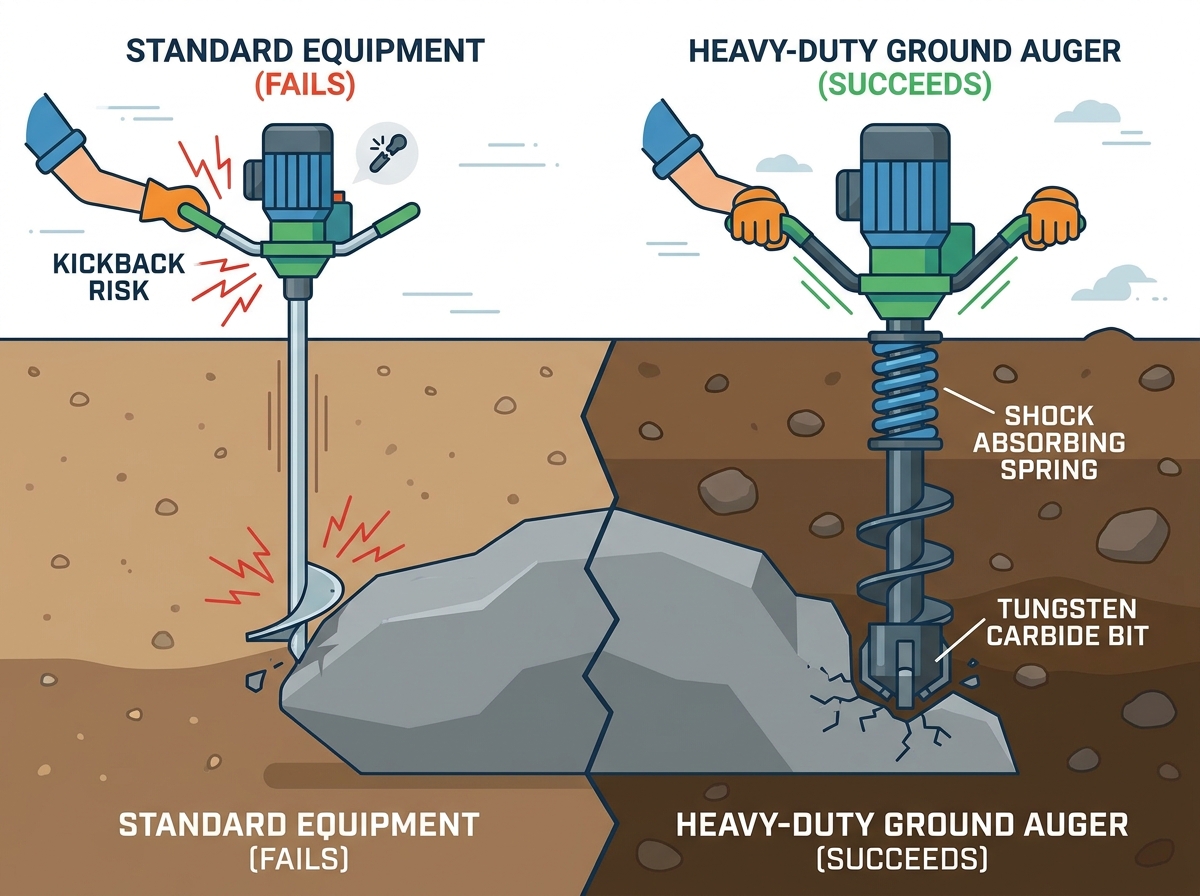
Standard landscaping tools simply cannot survive brutal subterranean rock strikes. When a spinning blade hits solid stone, it stops rotating immediately. However, the engine continues to generate massive forward momentum.
Kinetic energy transfers instantly during a dead stop. The force shoots straight up the metal shaft. It slams directly into the transmission gears. Finally, it jolts the operator's arms. This sudden impact creates severe mechanical stress. Lightweight materials absorb this energy poorly. The tool becomes a violent projectile if you lose your grip.
Using standard tools in hardpan introduces multiple immediate risks. Torque overwhelms flimsy metal tubes. This results in permanently bent shafts. Shear pins snap under sudden load stops. You will waste hours replacing these tiny metal safeties. Motor burnout happens when operators stubbornly force underpowered engines through dense gravel.
You must establish strict baseline criteria for survival. A true Heavy duty ground auger requires robust welded steel construction. It needs oversized gearboxes explicitly designed for high torque applications. Reinforced pilot bits are also essential. They guide the main cutting blades safely through dense, unpredictable gravel mixes.
Selecting the right machine depends entirely on your specific project scope. We evaluate the five most effective categories for breaking hard ground.
These machines feature large displacement engines. They deliver immense torque directly to the digging tip. They handle medium to large residential fencing projects easily. You need high RPMs paired with a heavy-duty transmission here. Landscaping professionals often rely on them for daily use. Always check the gear ratio before purchasing. A lower gear ratio multiplies the twisting force dramatically.
Commercial jobs demand absolute maximum power. Extremely dense, rocky hardpan requires dual-operator control. Two people stabilize the heavy machine effectively. This setup controls violent kickback much better than single-operator models. Two operators can comfortably handle massive 10-inch or 12-inch bits. You must maintain clear communication with your partner. Release the throttle instantly if the bit catches a root or boulder.
Noise-restricted neighborhoods require quieter outdoor tools. High-torque battery models fit moderate gravel mixes perfectly. They eliminate messy fuel mixing and loud exhaust noise. You must monitor battery drain closely. Heavy loads deplete lithium-ion batteries incredibly fast. Solid cobble stops them entirely. Keep extra battery packs charging nearby. They work best for intermittent weekend landscaping tasks.
Homeowners love these attachments for planting bulbs. You can quickly set small posts in loose topsoil. Small rocks pose no problem. However, you must clarify your realistic expectations. Solid rocks will aggressively snap your wrist. You must pair an Earth Auger for Drill with a powerful 18V+ tool. A sturdy side-handle is absolutely mandatory. Never attempt to drill deep holes without securing the auxiliary handle.
Power tools become highly dangerous around massive, immovable boulders. Precision digging requires a slow, manual approach. A dedicated Earth Auger Hand Tool gives you excellent tactile feedback. You can feel the exact moment the blade scrapes against stone. Welded steel T-handles provide superior manual leverage. Unibody construction prevents the shaft from bending under heavy human force. They navigate tight spaces beautifully.
You must rigorously inspect internal components before making a final decision. Looks can be deceiving. Paint color means nothing when striking subterranean granite.
Standard steel blades curl and blunt immediately in tough soil. You must look for thick tungsten carbide tips. Carbide withstands immense friction heat without losing its cutting edge. Replaceable blades add significant lifespan to your tool. Aggressive fishtail pilot points are equally important. They anchor the bit firmly before the main cutting blades engage the dirt.
A reliable Ground Auger features built-in safety mechanisms. Centrifugal clutches slip intentionally under extreme loads. This critical slipping action saves the engine from catastrophic failure. Shear pins act as an intentional weak point. They snap safely to protect the expensive gearbox. Shock-absorbing recoil springs sit between the powerhead and the shaft. They actively dampen violent twisting forces.
Many beginners wrongly assume higher RPMs equal better digging. High speed merely generates excessive heat and dangerous bounce. High torque provides consistent, relentless grinding power. Lower RPMs pull embedded stones out slowly and safely. High torque rips through thick roots without stalling. Always prioritize twisting force over pure rotational speed.
Table: Standard vs. Heavy-Duty Auger Specifications
Specification | Standard Soil Models | Rocky Soil Models |
|---|---|---|
Pilot Point | Stamped steel cone | Tungsten carbide fishtail |
Clutch Type | Direct drive / basic clutch | Heavy-duty centrifugal clutch |
Spring Assembly | Rigid connection | Shock-absorbing recoil coil |
Optimal RPM | High (Fast cutting) | Low (High torque grinding) |
Acquiring heavy equipment requires careful financial planning. You must calculate your actual tool ROI based on objective project metrics.
Evaluate the total number of holes you need to dig. Assess the specific soil severity carefully. A single retaining wall might require twenty deep holes through hardpan. Small DIY projects rarely justify large capital purchases. Professional landscaping jobs require owning your equipment to maintain daily efficiency.
We strongly argue for securing a Ground auger Rental for one-off projects. Tow-behind or hydraulic units cost thousands of dollars. Renting them makes perfect sense for extensive fence lines in extreme rock. These massive units prevent operator fatigue entirely. The machine's weight pushes the bit down naturally. You save days of exhausting manual labor. Return the machine once the weekend ends.
Certain scenarios make purchasing highly logical. Finding a new Ground auger for sale makes sense for ongoing property maintenance. Remote off-grid locations require permanent tool availability. Renting becomes impossible if you live two hours from a hardware store. Agricultural fencing requires constant seasonal repairs. Owning a reliable 4-stroke model guarantees you can fix broken posts instantly.
Having the best tool solves only half the problem. Poor operating technique causes severe injuries and destroys expensive equipment.
You can significantly reduce mechanical wear through proper preparation.
Pre-soak the area: Water softens baked hardpan effectively. Flood your marked spots 24 hours before digging.
Clear surface cobble: Use a spud bar to break top-level stones. Remove loose rocks manually.
Start a pilot hole: Dig the first few inches with a shovel. This guides the auger bit straight.
Stance dictates your physical safety. Bend your knees slightly. Keep the heavy powerhead close to your body core. Brace your legs wide apart. Let your strong leg muscles absorb sudden twists. Never rely purely on your lower back. Maintain a firm grip, but keep your elbows slightly bent. Locked elbows shatter easily during severe kickbacks.
Rocky holes often feature jagged, uneven walls. Setting your hardware requires extra care. Ensure the hole bottom is completely clear of loose gravel. You must secure a Ground Auger Anchor deeply enough to bypass the frost line. Use proper concrete footings in loose gravel mixes. Tamp the surrounding backfill firmly. Poor backfilling allows anchors to shift over time.
Success in rocky soil relies on 50% tool capability and 50% operator patience. Forcing a standard tool through stubborn hardpan guarantees failure. You must respect the terrain and match your equipment accordingly. Invest in tungsten carbide blades and heavy-duty transmissions. Prioritize shock absorption to protect your joints.
Your next step requires immediate site assessment. Dig a test hole manually. Assess your exact soil composition before spending money. Determine the ratio of loose gravel to buried boulders. Use this data to choose a specific category from our Top 5 list. Work slowly, maintain a strong stance, and let the machine do the heavy lifting.
A: Electric drill attachments manage loose gravel reasonably well. They cannot penetrate solid rock safely. Hitting a large subterranean rock will violently twist the drill body. This often causes severe wrist injuries. Always use an 18V drill equipped with an auxiliary side-handle. Limit these specific tools to soft topsoil or shallow bulb planting.
A: Never force the throttle. Turn off the engine immediately. Disconnect the powerhead from the bit if possible. Use a large pipe wrench to manually reverse the bit. Twist it carefully counter-clockwise until it frees itself. You may need to clear surrounding dirt with a narrow hand shovel first.
A: Yes, they distribute sudden torque spikes evenly between two people. When the bit strikes a solid rock, the twisting force is shared. This significantly reduces the risk of operator injury. Both operators must maintain strong verbal communication. They must brace firmly and release the throttle together during violent kickbacks.


