
Views: 0 Author: Site Editor Publish Time: 2025-11-10 Origin: Site


The brush cutter—a robust, versatile tool often referred to as a clearing saw or brush saw—is essential for effective vegetation management in agriculture, landscaping, and property maintenance. Designed to handle dense weeds, tall grasses, and even small shrubs or saplings, it bridges the gap between a standard lawn mower and a chainsaw, offering both power and precision. However, the performance and longevity of a brush cutter depend heavily on proper selection, usage, and maintenance. Neglecting blade sharpness or routine care can result in reduced cutting efficiency, higher fuel consumption, and unnecessary strain on the engine and gearbox. Understanding the capabilities and upkeep of a brush cutter ensures consistent performance, safer operation, and long-term value for both professionals and home users.
Before diving into applications, it helps to understand what we’re talking about. As noted by the Tamil Nadu Agricultural University (TNAU), “A brush cutter (also called a brush saw or clearing saw) is a powered garden or agricultural tool used to cut weeds and forage crops.”
In simple terms, a brush cutter is more powerful and capable than a standard line trimmer or basic lawn mower. It is designed to handle dense vegetation, shrubs, undergrowth, even saplings and small trees in some cases.
Key components include a power unit (gas, electric, battery), a shaft, a cutting head with blade or line, and in more advanced machines, attachments or changeable heads for specific purposes.
The answer lies in versatility and efficiency. Here are several reasons:
Clearing overgrown land: Whether it’s an old field, pasture with dense weeds, or a plot that hasn’t been maintained for some time, brush cutters can quickly bring the vegetation under control.
Weeding and vegetation management: Dense weeds compete with crops for sunlight, nutrients and water. Using a brush cutter helps free up those resources.
Access and safety: In landscapes, parks, trails, orchards or vineyards, dense undergrowth can hinder access, hide hazards and reduce visibility. A brush cutter helps remove these issues.
Preparing land for planting or other operations: Before you plant, irrigate, or build, you may need to clear the site. Brush cutters play a role in site-prep, especially for smaller farms, orchards or landscaping projects.
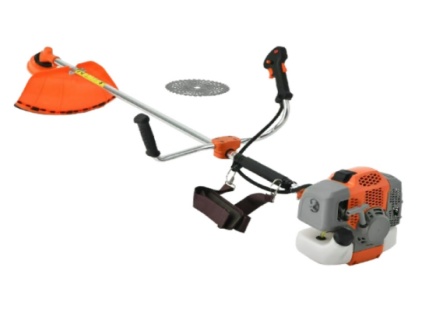
Here are some of the most valuable uses of brush cutters in farming and horticulture:
In orchards, vineyards, and vegetable farms, weeds and unwanted plants grow between crop rows, under trees, and around the perimeter. A brush cutter can be used to trim or clear that vegetation, improving airflow, reducing pest habitat, and allowing better access for harvesting or maintenance.
Farm boundaries, irrigation channels and areas left fallow often get overgrown. As one article notes, “Clearing overgrown field boundaries and irrigation channels with the brush cutter also improves water flow and limits pest habitats, further protecting the crop and enhancing overall productivity.”
Some farmers use brush cutters to mow or cut fodder crops—especially where traditional harvesting equipment may be too expensive, too large or unsuited. By managing vegetation quickly, they reduce labor, speed up operations and can respond to changing conditions.
When a field has been abandoned or neglected, brush cutters help reclaim it—removing tall grasses, shrubs and smaller trees, making it possible to convert into a productive plot. According to one source, this is especially useful for the “small farm” context.
For livestock farms, brush cutters can help maintain grazing paddocks by cutting down regrowth, weeds or brush that reduce the quality and accessibility of pasture.
Beyond agriculture, brush cutters are widely used in landscaping, municipal maintenance and land-management tasks.
Trail and path maintenance: Walk-behind or handheld brush cutters keep trails, parks and recreational areas free of overgrowth and safe for use. Site
clearing for construction or development: Before development, professionals often need to clear vegetation quickly and efficiently—brush cutters offer a practical solution.
Ecological restoration and invasive species management: In areas where overgrowth or invasive shrubs threaten the ecosystem, brush cutters assist in clearing and preparing land for restoration.
Selecting the right tool matters. Here are factors you should consider:
Power source: Gasoline-powered machines typically offer more power, suitable for heavy vegetation. Electric or battery units are quieter and better for lighter tasks or smaller areas.
Cutting head / attachments: Some brush cutters support different heads (blade, line, saw blade) depending on the vegetation type.
Size and maneuverability: For tight orchard rows, steep slopes or irregular terrain, a handheld unit may work better; for large open areas, a walk-behind or tractor-mounted option may be more efficient.
Durability and maintenance: Consider the build quality, parts availability and ease of sharpening or replacing blades. One source emphasized the importance of robustness in farming contexts.
Safety features and operator comfort: Especially when cutting thick brush, safety guards, proper shields, harnesses and ergonomic handles matter.
Using a brush cutter properly will enhance both performance and safety. Here are some best practices:
Inspect the area: Before cutting, clear rocks, hidden stumps, debris or obstacles that might damage the cutter or injure the operator.
Use appropriate timing: Dry days, mid-season maintenance passes and regular trimming help avoid letting vegetation get too dense.
Use correct cutting technique: Maintain control of the machine; for walk-behind units, start with a higher deck height and do a second pass if needed. On slopes, work side-to-side for better stability.
Safety gear: Wear long pants, gloves, protective eyewear, ear defenders and sturdy footwear. Ensure you’re trained or familiar with the machine’s manual.
Maintenance: Clean blades and surroundings after use, sharpen blades if needed, check for wear, tighten loose parts, and store the unit properly in off-season. One article emphasised longevity of use when maintained.
While brush cutters are powerful and versatile, there are scenarios where they may not be the best fit, or where additional equipment is required:
Very large trees or heavy stumps: For mature trees or large trunks, an excavator, stump grinder or full forestry mulcher may be required.
Extensive acreage requiring high throughput: In large industrial-scale farming or plantations covering hundreds of hectares, dedicated heavy machinery might offer better efficiency.
Wet or marshy terrain: Dense muddy conditions may limit the effectiveness of standard brush cutters and may require specialized equipment.
Precision landscaping or fine finish: If the objective is manicured turf, fine horticultural finishes or delicate planting beds, a brush cutter’s “rough cut” nature might not be ideal. One source noted brush hogs (a type of heavy cutter) leave a rough surface.
One article on small farms highlights that “brush cutters are used extensively … small meadows open on wooded properties, maintaining valuable early successional habitat.”
In Indian farming, the shift from sickles and manual labor to brush cutters meant improved productivity: “Weeds are aggressive competitors … A quality brush cutter enables fast and effective weed management,” leading to time and cost savings.
On landscaping projects and trails: “Handheld trimmers and brush cutters are capable of performing numerous tasks on small farms and gardens… many are designed to incorporate attachments such as brush-cutting blades, cultivators and edgers.”
These examples reflect how employing the right machine for vegetation management helps optimize operations, reduce labor costs and enhance land usability.
Whether you manage a small orchard, vineyard, vegetable farm, or a landscaping project around properties, driveways or natural areas, a brush cutter offers:
Time savings: Faster vegetation clearance means you can focus resources elsewhere (planting, harvesting, maintenance).
Labor savings: Less manual hand-cutting, less manual raking or removal.
Improved land health: Removing excessive weeds and brush improves air flow, sunlight penetration, reduces pest habitats and promotes crop or plant health.
Enhanced access and aesthetic: For landscape applications, tidier grounds and accessible pathways.
Multi-purpose use: One machine can serve several roles (weed control, perimeter trimming, under-tree maintenance, rough site prep) which increases ROI.
In summary, the brush cutter is an indispensable tool for efficient vegetation management, offering versatility, power, and reliability across agricultural and landscaping applications. Its effectiveness depends on careful selection, proper usage, and consistent maintenance—from daily cleaning and blade inspections to seasonal storage and sharpening. For professionals and homeowners seeking durable, high-performance brush cutters, Ningbo Yangyi Import and Export Co., Ltd. provides a comprehensive range of equipment and accessories designed to enhance safety, efficiency, and long-term value. By choosing the right model, maintaining it properly, and applying safe operational practices, users can unlock the full potential of brush cutters, achieving optimal results while saving time, labor, and operational costs.


