
Views: 0 Author: Site Editor Publish Time: 2026-10-14 Origin: Site


The industry transition from brushed to brushless motors is complete. The modern challenge for contractors is navigating feature bloat to identify which specifications actually drive job site efficiency. Purchasing a fleet of tools based on marketing metrics leads to overspending on unnecessary features or under-speccing tools. This results in premature failure, worker fatigue, and project downtime. To maximize ROI, construction professionals must evaluate a Brushless Drill based on sustained performance, safety mechanisms, environmental durability, smart fleet integration, and battery ecosystem compatibility rather than surface-level specifications. Stop looking at inflated peak torque numbers. Focus on how the tool performs during a ten-hour shift hanging drywall or drilling concrete anchors. This guide breaks down the exact mechanical features contractors need to demand from their next power tool investment.
Prioritize Safety and Control: Anti-kickback technology and precision electronic clutches reduce worker injury and material damage, offering higher ROI than raw torque alone.
Chuck Quality Dictates Lifespan: An all-metal ratcheting chuck with carbide inserts is a non-negotiable feature for heavy-duty construction applications to prevent bit slippage and wear.
Platform Over Product: The true cost of a brushless power drill includes the proprietary battery ecosystem; evaluating cell technology (e.g., 21700 cells) and thermal management is as critical as the tool itself.
Smart Features Drive Fleet ROI: Tool connectivity (app-based tracking and custom RPM settings) prevents theft and ensures consistent fastening across large crews.
Match Tool to Trade: High-torque models are essential for framing and masonry, while compact, high-RPM models or interchangeable chuck systems serve electricians and HVAC technicians better by reducing fatigue in tight spaces.
Commercial-grade tools differ vastly from prosumer models. You cannot judge a tool by its plastic casing. True commercial tools boast higher duty cycles. They handle sustained load capabilities without burning out. Internal component metallurgy separates the best from the rest. Powder-metal gears withstand sudden binds. Prosumer tools often use plastic internal gears to save weight. These strip out under heavy loads. When mixing thinset or drilling large holes through LVL beams, you need commercial durability. The motor must survive continuous amp draw. We look for all-metal gear housings. We inspect the planetary gear system. If the manufacturer uses nylon ring gears, the tool belongs in a residential garage, not on a commercial site. Heavy-duty applications demand hardened steel components that transfer power efficiently without shearing under stress.
The higher upfront cost of a brushless drill for construction is offset by its mechanical simplicity. Traditional motors rely on carbon brushes pressing against a commutator. This creates friction, heat, and inevitable wear. Brushless motors eliminate this physical contact. They use an electronic circuit board to deliver current to copper coils, creating a magnetic field that drives the rotor. Zero physical friction means zero brush replacements. The motor runs cooler and lasts significantly longer. You also get increased runtime per charge. Without the drag of carbon brushes, the battery transfers energy directly into rotational force. Crews spend less time walking back to the charging station and more time fastening materials.
Heat destroys power tools. Effective thermal management keeps crews working. Electronic communication between the brushless motor and battery prevents overheating. Thermistors monitor internal temperatures constantly. If you push the tool too hard, the brain intervenes. It shuts down the motor before the wiring melts. This happens frequently during continuous, high-draw applications. Mixing mud pushes a motor to its thermal limit. Drilling large diameter holes through thick timber does the same. Good thermal management protects your investment from aggressive operators. Advanced tools feature active cooling fans integrated into the rotor shaft. These fans pull ambient air over the stator coils. The housing design must include large exhaust vents that direct hot air away from the user's face.
Brushless technology drastically improves the power-to-weight ratio. Stators and rotors in modern tools take up less space. This allows for shorter head lengths. You get lighter tools without sacrificing output. Ergonomics play a massive role in daily productivity. Hanging ductwork overhead strains shoulders and wrists. A lighter tool directly reduces operator fatigue. Workers maintain better precision at the end of a long shift. Compact designs also fit between standard 16-inch on-center joist bays easily. You spend less time fighting the tool and more time working. We measure the balance of the tool with the battery attached. A well-balanced drill sits level in the hand without pitching forward. This neutral balance prevents forearm cramping during repetitive fastening tasks.
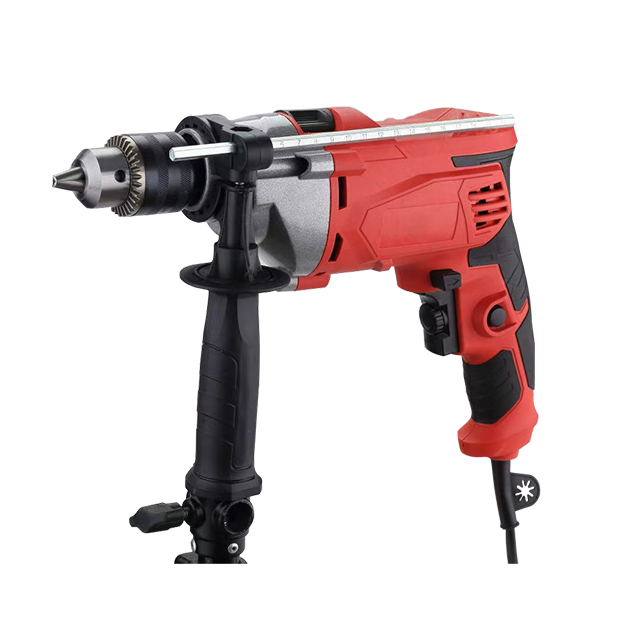
Peak torque is largely a marketing metric. Sustained torque matters much more. Manufacturers often boast about maximum inch-pounds. However, this peak only lasts for a fraction of a second. You should look at "max watts out" (MWO). MWO measures the actual power delivered under a sustained load. It shows how the tool performs while driving a long lag screw into dense oak. Multi-speed transmissions are equally critical. You need 2-speed or 3-speed all-metal gearboxes. They let you match RPM to specific materials. Use low speed and high torque for drilling thick metal. Switch to high speed for rapidly drilling through soft wood. A three-speed gearbox offers a dedicated medium setting. This medium speed is perfect for self-tapping screws in heavy-gauge steel studs, providing enough speed to drill the hole and enough torque to seat the thread without snapping the head.
Safety features protect your crew and your bottom line. Internal accelerometers detect sudden rotational binds. If a hole saw catches on a nail, the tool jerks violently. Anti-kickback technology senses this movement instantly. It shuts down the motor in milliseconds. This prevents severe wrist injuries. It also reduces workers' compensation claims. Precision fastening relies on electronic clutches. Mechanical clutches wear out and lose accuracy over time. E-clutches monitor current draw. They stop the motor exactly when the fastener seats. This prevents over-driving and stripping in delicate or repetitive fastening applications. When installing commercial hinges or cabinet hardware, an E-clutch ensures every screw sits perfectly flush without damaging the surrounding material.
The chuck is the primary point of contact with your work. A commercial drill must feature a 1/2-inch all-metal ratcheting chuck. Plastic chucks crack when dropped on concrete. They also fail to grip bits tightly. Carbide inserts are a non-negotiable upgrade. Carbide teeth sit inside the chuck jaws. They bite into round shank bits aggressively. This prevents the bit from spinning inside the chuck during high-torque applications. Slipped bits ruin the accessory and damage the chuck jaws. Carbide inserts minimize downtime caused by these slipped bits. We also look for a single-sleeve design with a spindle lock. This allows operators to tighten the chuck securely with one hand while holding the workpiece with the other.
Trigger quality dictates your level of control. A highly responsive variable speed trigger is essential. You need smooth potentiometers inside the switch. This allows for feathering fasteners into delicate materials. You can start a screw slowly without cam-out. Cheap triggers jump from zero to full speed instantly. Illumination also impacts work quality. Traditional trigger-mounted lights cast a shadow directly over the bit. Foot-mounted LED lights shine upward, illuminating the work surface clearly. Chuck-mounted light rings are even better. They eliminate shadows entirely, which is vital for tight workspaces. Some models offer adjustable light intensity and extended delay timers, turning the drill into a temporary work light inside dark electrical panels.
Smart tools change how you manage job sites. Built-in Bluetooth technology tracks tool location across multiple sites. If a tool walks off the job, you can lock it out via an app. This renders the stolen equipment useless. Custom application profiles offer incredible quality control. App-connected tools allow safety managers to set parameters. You can set maximum RPM and torque limits for specific tasks. If a crew is installing thousands of concrete anchors, consistency is key. The smart tool ensures every anchor receives the exact same torque. This guarantees quality control across an entire crew. Implementing this technology requires three basic steps:
Assign the tool to a specific crew member via the mobile app.
Set the maximum RPM limit based on the fastener specifications.
Lock the tool digitally at the end of the shift to prevent unauthorized use.
You can also pull diagnostic data from the tool. The app shows trigger pulls, thermal events, and overall runtime, helping you schedule preventative maintenance before a catastrophic failure occurs.
Contractors must understand application overlap. A standard drill/driver handles most daily tasks. It drills wood, metal, and plastic efficiently. However, you must decide when to pay the premium for a hammer drill mechanism. Hammer drills add weight and bulk. They use two serrated discs that slip past each other. This creates a rapid forward pulsing action. Evaluate the beats-per-minute (BPM) and impact energy. This is necessary for contractors who occasionally drill into brick, block, or light concrete. If you never drill masonry, skip the hammer feature to save weight. A dedicated rotary hammer is better for continuous concrete drilling. The hammer drill combo is a compromise tool designed for the occasional 1/4-inch Tapcon hole.
Impact drivers operate differently than hammer drills. You must clarify the mechanical difference. Rotational impact drivers use an internal hammer and anvil. They strike rotationally, not forward. This mechanism drives heavy hardware effortlessly. A brushless cordless impact drill is the superior choice for driving lag bolts. It handles structural screws and concrete anchors easily. The best part is the lack of reactionary torque. The tool does not twist your wrist. The anvil absorbs the force. This keeps your crew safe and reduces fatigue during heavy fastening. Impact drivers excel at driving long fasteners into dense materials without stripping the screw head. The rapid impacts keep the driver bit firmly seated in the fastener recess.
Versatility matters in tight spaces. Multi-head drills offer 4-in-1 systems. You get a right angle attachment, an offset head, a bit holder, and a standard chuck. Finish carpenters and cabinet installers rely on these. MEP trades use them to navigate crowded joist bays. You can drill perfectly straight holes in awkward corners. However, you must balance this extreme versatility against raw power. Multi-head systems have lower maximum torque output compared to dedicated heavy-duty drills. They are problem solvers, not primary heavy-duty workhorses. The offset attachment allows you to drive screws flush against a perpendicular wall. The right-angle attachment fits between studs where a standard drill body cannot physically enter.
Tool Type | Primary Mechanism | Best Application | Reactionary Torque on User |
|---|---|---|---|
Standard Drill/Driver | Smooth Rotation | Wood/Metal Drilling, Light Fastening | Medium to High |
Hammer Drill | Forward Percussion | Brick, Block, Light Concrete | High (Requires Side Handle) |
Impact Driver | Rotational Strikes | Lag Bolts, Concrete Anchors | Low |
Multi-Head Drill | Interchangeable Chucks | Cabinetry, Tight Spaces, MEP Rough-ins | Low |
Battery cell architecture dictates tool performance. The industry shifted from 18650 to 21700 lithium-ion cells. The larger 21700 cells hold more energy and run cooler. A brushless power drill draws more current from these cells without voltage sag. This means the tool maintains full power even as the battery drains. You must balance the weight versus runtime trade-off. Compact packs (2.0Ah - 3.0Ah) are perfect for overhead work. They keep the tool light. High-capacity packs (5.0Ah - 8.0Ah) are necessary for heavy drilling. Using a massive battery for light work just exhausts your crew. We recommend pairing compact batteries with impact drivers for overhead fastening. Reserve the heavy, high-capacity batteries for high-draw applications like mixing mortar or running large hole saws.
Choosing a brand is a long-term commitment. Recognize the hidden cost of adoption. Choosing a drill dictates the battery platform for all subsequent cordless tool purchases. You are buying into an ecosystem. Evaluate the manufacturer's wider range of trade-specific tools. Do they make reliable band saws, pipe threaders, or cable crimpers? Commit to a brand that supports your specific trade. A great drill is useless if the brand lacks the specialty tools your crew needs next year. Look at the charging infrastructure as well. Does the platform offer multi-bay rapid chargers? Can you charge batteries off a 12V vehicle inverter? The battery platform dictates your entire job site workflow.
Job sites are hostile environments. Brushless motors lack commutators and carbon brushes. This makes them inherently more durable. However, they still contain sensitive electronics. The internal circuit boards require conformal coating. This thin polymeric film protects against dust and moisture. Drywall dust is highly abrasive. Concrete silica holds moisture and causes shorts. Rain is a constant threat. Ensure the tool has proper ingress protection. Assess the exterior housing as well. Glass-filled nylon housings resist cracking. Rubber over-molding absorbs impact when the tool inevitably falls onto a concrete floor. We check the battery connection rails. They must be isolated from the main housing to absorb vibration and prevent the battery from snapping off during a drop.
Warranties vary wildly between brands. Read the fine print carefully. Many 3-year, 5-year, or lifetime warranties contain commercial use exemptions. A tool used for industrial construction might only carry a one-year warranty. Understand what is actually covered. Service center proximity is an operational risk. Choosing a brand without local, authorized repair centers hurts your schedule. Mailing broken tools back to a factory takes weeks. You need fast turnaround on broken equipment. Local service centers keep your fleet operational and your projects on track. Ask your distributor about loaner tool programs. Some manufacturers provide temporary replacements while your primary tool undergoes warranty repairs.
Audit your current battery platform inventory to identify which ecosystem holds the majority of your functional tools.
Assess the primary daily applications of your crews to determine the exact mix of standard, hammer, or impact mechanisms required.
Request field demos for the top two shortlisted models from your local distributor to test ergonomics under actual load.
Test the balance and trigger precision of the tools while wearing standard heavy-duty work gloves.
A: In heavy commercial use, a quality brushless tool typically lasts three to five years. The motor itself rarely fails. Usually, the chuck wears out, or the tool suffers catastrophic physical damage from drops. Regular cleaning and blowing out dust from the vents extends this lifespan significantly.
A: Yes. An impact driver uses rotational strikes to drive heavy fasteners. This mechanism prevents reactionary torque from transferring to your wrist. A standard drill will violently twist your arm when driving thick lag bolts into dense wood, whereas an impact driver absorbs that force internally.
A: They require very little internal maintenance. Because there are no carbon brushes to wear out, the motor is essentially maintenance-free. You only need to keep the exterior vents clear of dust, occasionally lubricate the metal chuck, and ensure the battery contact terminals remain clean and free of debris.
A: For general construction, 500 to 700 inch-pounds of sustained torque is plenty. Heavy-duty framing or drilling large holes with auger bits requires 1,000 to 1,400 inch-pounds. Focus on sustained power, often listed as Max Watts Out, rather than peak marketing numbers that only last a fraction of a second.
A: Anti-kickback uses internal sensors to detect sudden, violent rotation. If your bit binds in the material, the tool tries to spin out of your hands. The sensor detects this rapid acceleration and cuts power to the motor instantly, preventing severe wrist injuries and potential falls from ladders.
A: Yes, as long as they share the same voltage platform. However, attaching an 8.0Ah battery to a compact tool ruins its balance. It makes the tool heavy and awkward, defeating the purpose of buying a compact model designed specifically for tight spaces and overhead work.


