
Views: 0 Author: Site Editor Publish Time: 2026-08-25 Origin: Site


Successful home renovations depend fundamentally on matching power tool specifications to exact material tolerances. Relying on a one-size-fits-all approach often ruins finishes and compromises structural integrity. Using inadequate tools for heavy-duty tasks introduces severe project risks. Underpowered or incorrectly specified tools lead to stripped fasteners, cracked masonry, motor burnout, and project delays. You cannot expect a lightweight driver to penetrate poured concrete. You also cannot use a heavy percussive tool to hang delicate cabinetry.
To prevent these failures, you must evaluate an electric drill based on strict application requirements. We look at torque ratings, voltage capacities, and specialized functions like hammer or impact mechanisms. Understanding how these technical specifications translate to real-world performance ensures you get the right tool for your specific renovation scope. This guide breaks down the exact requirements for various renovation phases.
Task-to-Tool Matching: Standard drill/drivers handle drywall, plastics, and basic carpentry, but masonry and heavy anchoring require specialized hammer functions.
Torque Over Voltage: While voltage indicates potential power, torque (measured in N.m) dictates the tool's actual ability to drive fasteners into dense materials without stalling.
Battery Ecosystem Scalability: Investing in a specific lithium-ion platform dictates future tool compatibility; evaluating battery amp-hour (Ah) ratings is critical for sustained renovation work across multiple tools.
Risk Mitigation: Selecting the correct chuck size and clutch settings prevents material damage (cam-out) and extends the lifespan of both the tool and the consumables.
Executing primary renovation phases without mechanical failure requires establishing baseline tool requirements. Different building materials exert varying levels of friction and resistance on a bit or fastener. Success on the job site depends on matching the tool's rotational force, speed, and percussive capabilities to the specific density of the material you are drilling into.
Structural framing and subfloor installation present continuous, high-friction demands. When you build a partition wall or lay down 3/4-inch OSB subflooring, you drive hundreds of long screws into dense dimensional lumber. The wood fibers tightly grip the screw shank, creating massive resistance. If the tool lacks sufficient power, the motor stalls mid-drive. This leaves fasteners protruding, which ruins the flush surface needed for drywall or flooring.
For these repetitive tasks, a 21V lithium 10mm drill for wood drilling provides the necessary sustained RPMs. The 21-volt platform delivers consistent power output even as the battery discharges throughout the day. Effective thermal management within the tool prevents the motor from overheating during continuous subfloor fastening. The 10mm chuck easily accommodates standard driver bits and pilot hole drills, ensuring efficient progress through heavy Douglas fir or pine lumber.
Hanging drywall and mounting cabinets demand precision rather than raw power. Sinking screws into drywall requires stopping at the exact millimeter where the screw head dimples the paper without tearing it. If you break the paper face, the gypsum core has no structural holding strength, leading to popped screws and loose panels later. Similarly, driving fasteners into hardwood cabinetry requires finesse to avoid splitting expensive oak or maple veneers.
This phase necessitates precise clutch control. A mechanical clutch disengages the drivetrain once a specific torque threshold is reached, stopping the bit from turning even if you hold the trigger down. You must balance this need for precision with ergonomic considerations. Overhead drywall work quickly causes arm fatigue. Selecting a lightweight chassis with a compact battery ensures you maintain control and accuracy during prolonged ceiling installations.
Renovations frequently involve routing utilities through existing structures. You will drill through PVC plumbing pipes, metal studs, and aluminum HVAC ductwork. Each material reacts differently to heat and friction. Drilling through PVC at high speeds melts the plastic, creating a messy, inaccurate hole that compromises pipe fittings. Conversely, drilling through metal studs requires slow speeds and high pressure to allow the bit to cut without burning out the cutting edges.
Variable speed triggers and low-gear torque settings solve these problems. A two-speed gearbox allows you to drop the tool into a low RPM, high-torque mode. This configuration prevents plastic from melting and keeps metal-cutting bits sharp. Using step bits for ductwork or large hole saws for plumbing routes relies entirely on the tool's ability to maintain a slow, steady rotation under heavy load without binding.
Penetrating brick, cinderblock, and poured concrete introduces entirely different mechanical requirements. Standard rotational drilling simply polishes the bottom of a masonry hole. The friction quickly destroys the carbide tip of the drill bit through extreme heat buildup. Concrete requires a mechanism that physically breaks the material apart while clearing the resulting dust from the hole.
This requires a 21V cordless impact hammer electric drill. The hammer function introduces a rapid linear percussive action. As the bit rotates, it simultaneously strikes forward thousands of times per minute. This percussive force shatters the hard aggregate within the concrete, while the rotational force uses the flutes of the masonry bit to extract the debris. Attempting heavy anchoring for ledger boards or basement framing without this function guarantees ruined bits and stalled projects.
Beyond drilling holes and driving screws, these tools accelerate various renovation chores. During the drywall and tiling phases, you can attach mixing paddles to prepare joint compound, thinset mortar, or heavy paints. Mixing a 5-gallon bucket of dense compound places immense strain on a motor. It feels like stirring thick mud, requiring a tool with a robust low-gear setting to prevent the internal wiring from melting.
During demolition and preparation, wire wheel and nylon brush attachments prove invaluable. You can aggressively remove rust from old ironwork, strip peeling paint from baseboards, and deep-clean surfaces before applying new finishes. These applications require a tool capable of sustaining high RPMs for extended periods without triggering thermal overload protection circuits.
Understanding the structural differences between tool types guides your shortlisting process. Manufacturers engineer different internal architectures to solve specific physical challenges on the job site. Selecting the right category prevents you from forcing a tool to perform a task it was never designed to handle.
The standard drill/driver serves as the baseline tool for most light-to-medium renovation tasks. Its architecture typically includes an adjustable mechanical clutch, a two-speed gearbox, and a standard keyless chuck. The clutch allows you to dial in the exact torque needed for delicate fastening, preventing material damage on finished surfaces.
Compact 12-volt models excel in tight spaces, offering maximum maneuverability inside cabinets or between narrow floor joists. Higher-voltage systems provide the continuous power needed for heavier, sustained use. Standard drill/drivers are best utilized for drilling pilot holes, assembling fixtures, and handling delicate materials where precision overrides the need for extreme force.
An impact driver features a completely different internal architecture. Instead of a standard clutch and continuous rotation, it utilizes an internal anvil and hammer mechanism. When the tool encounters resistance, the internal hammer rapidly strikes the anvil in the direction of rotation. This delivers massive spikes of torque without transferring reactionary twisting force to your wrist.
A 35N.m 21V impact drill for DIY and professional crossover excels at driving heavy fasteners. When installing deck ledgers or driving lag bolts into structural framing, the rotational strikes force the fastener through dense wood effortlessly. Because the impact mechanism absorbs the rotational resistance, you can drive large bolts one-handed without the tool violently twisting out of your grip.
A hammer drill differs significantly from an impact driver. While an impact driver delivers rotational strikes, a hammer drill delivers linear percussive strikes. The chuck pulses forward and backward while spinning. This action is specifically engineered for masonry and concrete work.
For standard home renovations involving brick facades or cinderblock basement walls, a combi-hammer drill is usually sufficient. It looks like a standard drill but includes a switchable hammer function. However, for large-scale hardscape renovations involving deep anchoring into cured, poured concrete, a dedicated rotary hammer utilizing SDS bits becomes necessary to handle the extreme percussive demands.
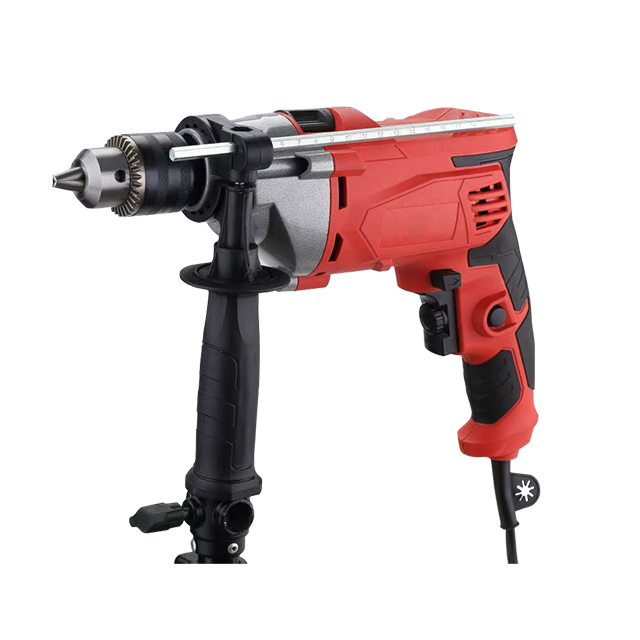
Evaluating tool specifications requires translating technical numbers into practical project outcomes. You must assess how torque, chuck capacity, and motor design directly impact your ability to complete renovation tasks efficiently.
Torque, measured in Newton-meters (N.m), defines the twisting force a tool can apply. Higher voltage often correlates with higher torque, but the gearbox design ultimately dictates how that power is delivered to the material. A high N.m rating means the tool can drive thicker fasteners into denser materials before the motor stalls.
All-metal gear construction is mandatory for durability in high-torque scenarios. Plastic internal gears will strip and fail under the stress of driving lag bolts or mixing dense thinset. When evaluating a tool, prioritize those with metal planetary gears. They ensure the torque transfers efficiently from the motor to the chuck without mechanical failure.
The chuck is the mechanism that holds the drill bit. Capacity typically ranges between 10mm (3/8-inch) and 13mm (1/2-inch). A 10mm chuck is lighter and sufficient for most standard driver bits and small twist drills. However, a 13mm chuck offers greater versatility for heavy renovation work.
Chuck size limits the maximum shank diameter of your accessories. Large hole saws for plumbing, heavy auger bits for running electrical wire, and thick mixing paddles often require a 13mm chuck. Selecting a tool with a ratcheting, all-metal chuck ensures superior bit retention. This prevents round-shank bits from slipping and spinning inside the jaws when they encounter heavy resistance in wood or metal.
Motor design heavily influences tool longevity and efficiency. Traditional brushed motors use physical carbon brushes to transfer electricity to the spinning armature. This creates friction, generates heat, and results in energy loss. The brushes eventually wear out and require manual replacement.
Brushless motors utilize an electronic circuit board to coordinate energy delivery via electromagnets. This eliminates physical friction, drastically reducing heat generation and extending battery runtime per charge. The increased efficiency, zero maintenance, and superior electronic torque control make brushless motors the standard for serious project execution.
Tool Architecture | Primary Action | Torque Delivery Method | Ideal Renovation Materials |
|---|---|---|---|
Standard Drill/Driver | Continuous Rotation | Smooth, clutch-controlled | Drywall, cabinetry, plastics, softwoods |
Impact Driver | Rotational Strikes | High-impact, anvil-driven | Dense framing lumber, deck boards, lag bolts |
Combi-Hammer Drill | Linear Percussion | Continuous rotation with forward pulsing | Brick, cinderblock, mortar, light concrete |
Rotary Hammer (SDS) | Heavy Electro-Pneumatic Percussion | Piston-driven strikes | Poured concrete, heavy stone, slab demolition |
Tool selection always involves compromises. You must weigh the benefits of runtime against mobility, and power against physical fatigue. Understanding these trade-offs ensures you select a system that aligns with your specific working conditions on site.
Corded tools offer infinite runtime and consistent power delivery, making them ideal for stationary tasks like mixing large batches of mortar. However, they introduce trip hazards and limit mobility across a dynamic renovation site. Cordless platforms provide absolute freedom of movement, which is essential when climbing ladders, working on roofs, or navigating unpowered areas.
Investing in a cordless platform requires strategic thinking about battery cross-compatibility. Selecting a robust 21V ecosystem allows you to seamlessly swap batteries between your drill, reciprocating saw, brad nailer, and circular saw. Purchasing high-quality lithium-ion packs from a unified platform ensures you maximize your tool utility across all phases of the renovation without juggling multiple charger types.
Power comes with a weight penalty. High-capacity batteries, such as 5.0Ah or 6.0Ah packs, provide extended runtime but add significant weight to the base of the tool. Wielding a heavy tool during prolonged overhead tasks, such as installing ceiling drywall or routing overhead HVAC lines, accelerates user fatigue and reduces precision.
You must analyze this trade-off based on the task. For benchtop assembly or floor framing, a heavy battery is manageable and provides great balance. For overhead work or tight cabinet installations, pairing a compact tool chassis with a lighter 2.0Ah battery improves ergonomics and control, even if it requires more frequent battery swaps.
Even the best tools fail if applied incorrectly. Understanding common implementation risks allows you to adopt mitigation strategies that protect your materials, your tools, and your project timeline.
Cam-out occurs when the driver bit slips out of the fastener head, stripping the metal and often gouging the surrounding material. This happens when the tool applies more rotational force than the fastener's recess can handle. Using worn bits or incorrect bit types exacerbates this issue.
Mitigate this risk through proper bit selection and clutch utilization. Upgrade from standard Phillips heads to Torx or Robertson (square drive) fasteners, which inherently resist cam-out. You can also follow a strict setup process to protect your materials.
Insert the correct driver bit into the chuck and tighten it until it clicks securely.
Locate the numbered clutch collar behind the chuck.
Rotate the collar to the lowest number setting (usually 1 or 2).
Drive a test fastener into a scrap piece of your project material.
If the clutch disengages before the screw is flush, increase the number by one and try again.
Stop adjusting once the screw head sits perfectly flush with the material surface.
Lithium-ion batteries are sensitive to extreme heat. High-draw applications, such as mixing dense thinset, driving large auger bits through multiple studs, or continuous masonry drilling, pull massive amounts of current. This rapid discharge overheats the internal cells, triggering the battery's thermal overload protection and shutting down the tool mid-task.
To manage this risk, implement strict duty cycles for heavy tasks. Allow the tool and battery to rest and dissipate heat between intensive applications. Utilize active cooling chargers that blow air through the battery pack during the charging cycle. Rotating multiple battery packs ensures you always have a cool, fully charged power source ready, preventing project bottlenecks.
Audit your renovation material list to identify the densest materials you will drill into, such as poured concrete or heavy structural timber.
Select a scalable 21V battery platform that supports expansion into other cordless tools like reciprocating saws and nailers.
Match your chuck size to the largest hole saw, auger bit, or mixing paddle required for your specific project phases.
Set your mechanical clutch on a scrap piece of material before driving fasteners into finished cabinetry or drywall.
A: A standard drill provides smooth, continuous rotation and features a mechanical clutch to prevent over-driving screws. It is ideal for drilling holes and delicate fastening. An impact driver lacks a clutch and uses an internal anvil to deliver rapid rotational strikes. This mechanism delivers massive torque for driving long, thick fasteners into dense wood without transferring twisting force to your wrist.
A: A 12V drill offers an excellent power-to-weight ratio and superior maneuverability, making it perfect for basic DIY, cabinet assembly, and tight spaces. However, a 21V drill is necessary when you exceed the material density limits of 12V tools. If you are framing with dimensional lumber, drilling into masonry, or using large hole saws, the higher voltage prevents motor stalling.
A: No. A standard drill relies solely on continuous rotation, which only creates friction against concrete. This rapidly overheats and destroys masonry bits while burning out the tool's motor. Anchoring into concrete requires a hammer function, which provides linear percussive strikes to physically shatter the hard aggregate while the bit rotates to clear the dust.
A: Torque measured in Newton-meters (N.m) indicates the twisting force the tool applies. A 35N.m rating provides substantial power for medium-to-heavy tasks. In practical terms, it allows you to drive 3-inch wood screws into dense framing lumber without pre-drilling, or comfortably use spade bits to run electrical wire through standard wall studs without the motor bogging down.
A: Your choice depends on accessory compatibility. A 10mm (3/8-inch) chuck handles standard driver bits and basic twist drills, keeping the tool compact. A 13mm (1/2-inch) chuck is required for heavy-duty renovations because it accommodates the larger shanks found on heavy auger bits, large hole saws for plumbing, masonry bits, and heavy paint or mud mixing paddles.
A: Yes, for extensive renovations. Brushless motors use electronic boards instead of physical carbon brushes. This eliminates internal friction, resulting in significantly less heat generation, up to 50% longer battery runtime per charge, and zero brush maintenance. They also provide superior electronic torque control, making them highly durable for long-term, heavy-duty project execution.
A: Yes. With the correct attachments, these tools are highly versatile for renovation prep. You can attach steel mixing paddles to blend drywall mud, paint, or thinset mortar. You can also use wire wheel and nylon brush attachments for aggressive surface preparation, such as removing rust from metal fixtures or stripping peeling paint from old trim.


