
Views: 0 Author: Site Editor Publish Time: 2026-08-11 Origin: Site


Buying the wrong drill carries hidden costs that go far beyond the initial purchase. You might face burnt motors when pushing through dense materials, stripped screws from poor clutch control, or physical strain from carrying unnecessary weight all day. Navigating a saturated power tool market is difficult. Marketing metrics like maximum voltage often obscure actual performance capabilities, leading to mismatched tool-to-task investments.
We provide a technical, evidence-based breakdown of how to evaluate an electric drill based on true power output, speed control, chuck specifications, and runtime efficiency. You will learn exactly how to match specific construction or household demands with the right equipment. Understanding these core mechanics prevents premature tool failure and ensures you have the exact torque and speed required for your specific applications.
Match Power to Application: 12V cordless models excel in precision and tight household spaces; 18V/20V platforms offer professional versatility; high-wattage corded models deliver uninterrupted torque for heavy-duty tasks.
Prioritize Motor Efficiency: Brushless motors and high Amp-hour (Ah) battery ratings are more critical for sustained cordless runtime than raw voltage alone.
Specify the Right Chuck: Select a 1/2-inch (13mm) chuck for construction-grade hole saws and masonry bits, and consider keyed chucks for extreme vibration environments.
Understand Purchasing Formats: Evaluate whether a comprehensive starter kit or a "bare tool" makes the most financial sense based on your existing battery ecosystem.
Assessing your frequency of use and material density is the first step in tool selection. Driving small screws into drywall or pine requires vastly different mechanics than boring through structural steel. Basic household repairs rarely demand extreme torque. They require precision and control. Drilling into masonry, concrete, and heavy timber demands sustained power. You must establish baseline requirements before looking at specifications.
A compact 12V system is often superior for indoor household tasks. These smaller units offer exceptional maneuverability. They fit inside narrow cabinet boxes and tight joist bays. The reduced weight prevents shoulder fatigue during overhead installations. You can comfortably hold a 12V tool above your head for extended periods while installing ceiling fixtures or running wire through top plates.
Job sites demand 18V or 20V durability. Professional environments subject tools to constant drops, dust, and continuous heavy loads. You need robust internal gearing and higher voltage to survive daily construction abuse. When you drive hundreds of three-inch deck screws in a single afternoon, a 12V motor will overheat. An 18V system absorbs that workload without triggering thermal protection circuits.
Follow these steps to assess your baseline workload:
Identify the primary material you drill into daily (e.g., softwoods, hardwoods, mild steel, or masonry).
Calculate your average continuous trigger time per session to determine cooling requirements.
Assess the physical constraints of your typical workspace to decide if a compact tool is mandatory.
Evaluate the maximum fastener size you regularly install to establish your minimum torque threshold.
Standard rotary drills are the foundation of any tool kit. They are ideal for clean hole boring. They drive standard fasteners in wood, plastic, and light metal. The smooth rotational force provides excellent control for delicate materials. You use these for installing hinges, drilling pilot holes, and assembling furniture. They utilize planetary gear systems to transfer motor speed into rotational torque. However, they lack the concussive force needed for masonry.
Hammer drills add a forward-pulsing concussive action to the standard rotation. This mechanism is essential for penetrating brick, block, and concrete. Inside the gearbox, two serrated metal discs slip over each other as the chuck turns. This creates a rapid hammering motion that fractures the masonry ahead of the bit. The rotation then clears the debris out of the hole. Without this action, you will quickly burn out masonry bits through excessive friction. You can usually switch off the hammer function for standard drilling tasks.
Impact drivers differentiate rotational concussive force from standard drilling. They are specifically designed for driving long lag bolts and heavy fasteners. The internal anvil strikes the rotating chuck rapidly when resistance increases. This prevents stripping the screw head. It also stops rotational torque from transferring to your wrist. Impact drivers do not have adjustable clutches. They are not designed for precision hole boring, as the impact action will shatter delicate drill bits.
Tool Type | Primary Mechanism | Best Applications | Limitations |
|---|---|---|---|
Standard Drill | Smooth rotational torque | Wood, plastic, light metal, pilot holes | Cannot penetrate concrete efficiently |
Hammer Drill | Rotation + forward concussive blows | Brick, cinder block, mortar, standard drilling | Heavier and longer than standard models |
Impact Driver | Rotation + lateral concussive strikes | Lag bolts, deck screws, heavy fastening | No clutch for precision; shatters standard bits |
Evaluating continuous amperage and wattage is mandatory for tasks demanding zero power fade. Corded tools provide unlimited runtime. You never have to wait for batteries to charge. They deliver consistent torque from the moment you pull the trigger until the job is done. This makes them indispensable for specific high-load applications. They excel where cordless batteries would quickly overheat and shut down.
Use cases for a high power electric power tools electric drill setup include mixing mortar, continuous masonry drilling, and heavy steel fabrication. Mixing thick compounds like thinset or drywall mud puts immense strain on a motor. The paddle creates massive drag. Corded units handle this sustained resistance without thermal overload. They pull continuous amperage directly from the wall, maintaining their RPMs under heavy pressure.
Consider the thermal efficiency of an 800W efficient electric tool electric drill during high-load applications. This benchmark demonstrates how corded tools manage heat dissipation. The continuous power supply allows for larger internal cooling fans and heavier copper windings. Sustained torque remains stable hour after hour. Cordless batteries would trigger thermal protection circuits and shut down under identical continuous loads to prevent cell damage.
The industry has shifted heavily toward 18V and 20V lithium-ion platforms. Cordless tools eliminate trip hazards on active job sites. You no longer need to drag heavy extension cords across wet ground, through finished rooms, or up scaffolding. This mobility speeds up production significantly. You can move from the roof to the basement without searching for an outlet or managing tangled cords.
You must weigh portability against specific trade-offs. Cordless convenience comes with limited runtime. You must manage battery charging cycles constantly to avoid downtime. Battery degradation occurs over time, reducing overall capacity after several hundred charge cycles. Cold-weather performance drops are a real concern. Lithium-ion cells lose efficiency in freezing temperatures. You must keep batteries warm in your truck or jacket to maintain peak power output on winter job sites.
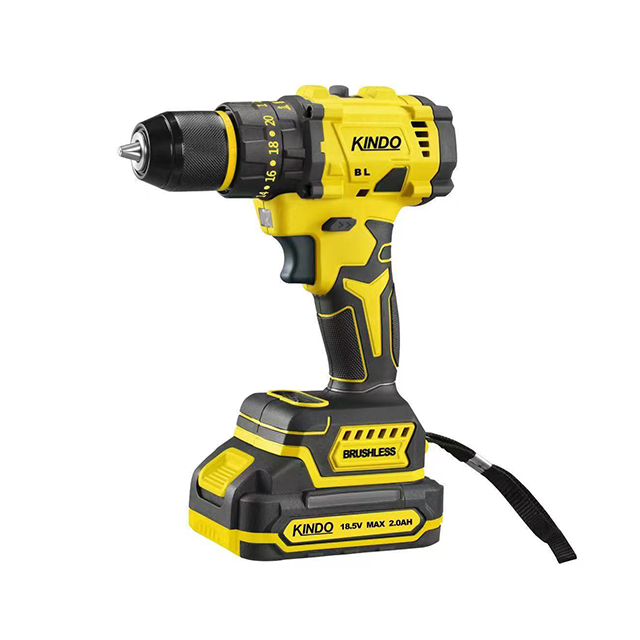
Understanding torque is the primary indicator of driving and drilling capability. Torque is measured in inch-pounds (in-lbs) or Newton-meters (Nm). It represents the twisting force the tool applies to the fastener. Rotational speed alone does not drive a thick lag bolt into dense oak. High torque overcomes material resistance. You need high torque ratings for heavy construction tasks. A basic household model might offer 400 in-lbs, while a professional framing model delivers over 1,200 in-lbs.
Deconstructing cordless voltage tiers reveals what they actually mean for motor output. 12V systems utilize three lithium-ion cells wired in series. They are compact and lightweight, handling standard screws and small holes easily. 18V and 20V Max systems utilize five cells in series. They are the professional standard, offering the best balance of power and weight. 36V systems tackle extreme heavy-duty tasks by combining multiple cell banks. They rival corded tools in raw output but add significant weight to your tool belt.
Corded wattage ratings indicate the tool's ability to handle sustained work. Higher wattage means a more robust motor with thicker copper windings. Thermal management during heavy, continuous loads is critical. A higher wattage motor runs cooler under stress. It powers through dense materials without burning out the internal components. Always check the amp rating on corded models to gauge true working capacity. A 5-amp motor is for light duty, while an 8-amp or 10-amp motor handles industrial applications.
The necessity of variable speed triggers cannot be overstated. They allow you to start a hole slowly without the bit wandering across the material surface. As the bit bites into the wood or metal, you squeeze the trigger harder to increase RPMs. Multi-gear transmissions are equally essential. Most professional models feature a two-speed gearbox. Low gear (typically 0-400 RPM) provides high torque for driving thick screws. High gear (typically 0-1,500+ RPM) delivers fast rotational speed for drilling clean holes quickly. You switch gears based on the material and the accessory.
Adjustable clutch settings prevent cam-out and protect delicate materials. The clutch is the numbered dial located directly behind the chuck. It disengages the drive at specific torque thresholds. This stops screw heads from shearing off. It prevents you from driving a screw too deep into drywall or soft pine. Setting the clutch correctly ensures consistent, flush fastener installations across the entire project. When you switch to drilling mode, you rotate the collar past the numbers to the drill icon, which locks the clutch and provides maximum continuous torque.
Chuck capacity dictates the size of the accessories you can use. A 3/8-inch (10mm) chuck is common on 12V models. It handles standard drill bits perfectly for household tasks. A 1/2-inch (13mm) chuck is standard on professional 18V/20V models. You need this larger capacity for large hole saws, auger bits, and thick masonry shanks. Smaller chucks severely limit your application range, preventing you from using heavy-duty accessories.
You must choose between keyless and keyed chucks based on your environment. Keyless chucks offer rapid bit changes by hand. They feature a ratcheting mechanism that grips the bit tightly. They are convenient for general tasks. However, you must know when to specify a 13mm 780W key chuck impact drill for construction. Keyed chucks use a mechanical key to tighten the jaws via a gear mesh. This prevents bit slippage under extreme vibration and heavy torque. Heavy masonry drilling often causes keyless chucks to loosen, dropping the bit into the dust. Keyed versions lock the bit securely in place regardless of the vibration.
Extended auxiliary side handles play a critical safety role. High-torque models generate immense twisting force. If a large hole saw binds up in a wood stud, the tool will violently twist in your hands. This sudden bind-up can cause severe wrist injuries or knock you off a ladder. The side handle gives you the leverage needed to control the tool safely during heavy applications. You should always attach the side handle when using bits larger than one inch in diameter.
Evaluate the placement and brightness of integrated LED work lights. You will often work in dark cabinets, unlit joist bays, and cramped crawlspaces. A poorly placed LED, typically located directly under the chuck, casts a massive shadow directly over your work area. The best designs place the light at the base of the handle, near the battery pack. This angles the beam upward, illuminating the exact point of contact without casting chuck shadows. Some premium models feature a halo ring of LEDs around the chuck for shadowless illumination.
Amp-hour (Ah) ratings dictate your total runtime. Think of the Ah rating as the gas tank of the tool. A 2.0Ah battery is a small tank. A 5.0Ah battery is a large tank. Higher Ah ratings allow you to work longer between charges. However, they directly affect the tool's overall weight and balance. A massive 8.0Ah battery makes a compact tool incredibly heavy and difficult to maneuver overhead. A 2.0Ah pack uses a single row of lithium-ion cells, keeping the profile slim. A 5.0Ah pack uses two rows of cells, doubling the weight and bulk.
Understand the relationship between battery draw, heat generation, and cycle life. Heavy loads pull more current from the lithium-ion cells. This rapid energy draw generates significant heat. Excessive heat degrades battery cells over time, permanently reducing their capacity. Using a higher capacity battery for heavy tasks distributes the load across more cells. This reduces heat buildup per cell and extends the overall lifespan of the battery pack. Using a small 2.0Ah battery for heavy masonry work will overheat the pack rapidly and destroy the cells.
Battery Capacity | Physical Profile | Ideal Applications | Heat Management |
|---|---|---|---|
1.5Ah - 2.0Ah | Slim, single-row cells | Overhead work, tight spaces, light assembly | Poor under heavy continuous loads |
3.0Ah - 5.0Ah | Standard, double-row cells | General construction, framing, masonry | Excellent balance of weight and cooling |
6.0Ah - 12.0Ah | Bulky, multi-row cells | Stationary tools, heavy auger drilling | Superior heat dissipation for extreme tasks |
Technical differences in friction and energy transfer separate brushed from brushless motors. Brushed motors use physical carbon blocks rubbing against a copper commutator to transfer electricity to the spinning rotor. This physical contact generates friction, heat, and electrical arcing. It wastes battery energy. The carbon brushes eventually wear out and require manual replacement. This is older, less efficient technology, though it remains cost-effective for occasional users.
Brushless motors use electronic circuit boards and neodymium magnets to drive the rotor. There is no physical contact between the stator and the rotor. This eliminates friction and drastically reduces heat generation. The electronic controller senses the resistance and adjusts the power draw accordingly. Brushless motors offer up to 50% more runtime on a single battery charge. They require zero maintenance. They provide a longer tool lifespan and deliver more consistent torque under load. These benefits easily justify the higher upfront cost for serious users.
Consider the physical toll of heavy equipment. High-voltage batteries and large motors add significant weight. Using a heavy tool for overhead work causes rapid shoulder and arm fatigue. Extended shifts magnify this physical strain. A poorly balanced tool strains your wrist, even during simple tasks. You must physically hold the tool with the battery attached to evaluate its center of gravity. A well-balanced tool will sit level in your hand without requiring you to fight the weight of the chuck or the battery.
You must balance the requirement for high torque with user fatigue. You do not need a heavy-duty hammer drill to install cabinet hardware. Maneuverability in tight joist bays or narrow spaces is often more valuable than raw power. Having a compact, lightweight option for repetitive tasks saves your joints. Reserve the heavy, high-torque models for tasks that genuinely require that level of force, such as drilling through concrete foundation walls or driving heavy lag bolts into deck ledgers.
Purchasing a starter kit is usually the most cost-efficient route for first-time buyers. Kits typically include the tool, two batteries, a charger, and a hard case or bag. Buying these components separately costs significantly more. Kits ensure you have everything needed to start working immediately. They establish your foundation in a specific brand's ecosystem. Having two batteries is mandatory for continuous work; one charges while you use the other.
Leverage bare tool purchases to expand your capabilities later. A bare tool includes only the tool itself. There are no batteries or chargers included in the box. This is highly cost-effective once you are already invested in a specific battery platform. You simply use your existing batteries to power the new tool. This strategy prevents you from accumulating unnecessary chargers and redundant battery packs, saving you money and storage space in your workshop.
The reality of modern battery platforms is ecosystem lock-in. Buying a cordless tool means buying into a proprietary battery ecosystem. A battery from one brand will not fit a tool from another brand due to proprietary rail designs and electronic communication pins. You must evaluate the entire lineup of tools offered by a manufacturer before making your first purchase. Ensure they make all the specialized tools you might need in the future, such as circular saws, oscillating multi-tools, or outdoor power equipment.
Evaluate the long-term viability of the battery platform. Look for brands with a proven track record of backward compatibility. You want assurance that new batteries will fit your older tools years down the line. Switching brands later requires abandoning your entire investment in batteries and chargers. Choose your initial ecosystem carefully based on your long-term project goals, not just the price of a single drill.
Take these actionable steps to finalize your equipment selection:
Audit your most frequent tasks to determine if you require high torque for masonry or compact maneuverability for cabinetry.
Select a cordless battery platform that offers a wide range of compatible tools for future expansion without requiring new chargers.
Purchase brushless motors if you plan to use the equipment for extended, heavy-duty sessions to maximize runtime and tool life.
Match your chuck size and type to the specific bits, hole saws, and masonry accessories you use most often.
Invest in corded models for stationary, high-resistance tasks like mixing mortar where battery heat generation becomes a limiting factor.
A: There is no functional difference in power. Both operate on the exact same lithium-ion cell configuration. "20V Max" refers to the initial peak voltage immediately after charging, without a load applied. "18V" refers to the nominal voltage under a typical working load. It is strictly a difference in marketing terminology.
A: It is highly discouraged. Standard models lack the concussive hammering action required to break through masonry. Using a standard model on concrete will generate excessive friction, rapidly dulling your masonry bits and potentially burning out the tool's motor due to sustained resistance.
A: The clutch is designed to slip when it reaches a specific torque threshold to prevent over-driving screws. If it slips too early, your clutch collar is set to a number that is too low for the density of the material. Turn the collar to a higher number or the drill icon.
A: Yes, for frequent or professional use. Brushless motors eliminate internal friction, which reduces heat. This results in up to 50% longer battery runtime, zero maintenance requirements, and a significantly longer overall lifespan for the tool compared to traditional brushed motors.
A: Avoid leaving them in freezing temperatures or extreme heat, such as inside a hot vehicle. Do not drain them completely to zero before recharging. Store them indoors at room temperature with roughly a 50% charge if you do not plan to use them for several months.
A: Amp-hour (Ah) measures the battery's energy storage capacity. A higher Ah rating means the battery will run longer before needing a recharge. However, higher Ah batteries contain more internal cells, making them physically larger and heavier, which affects tool balance.


